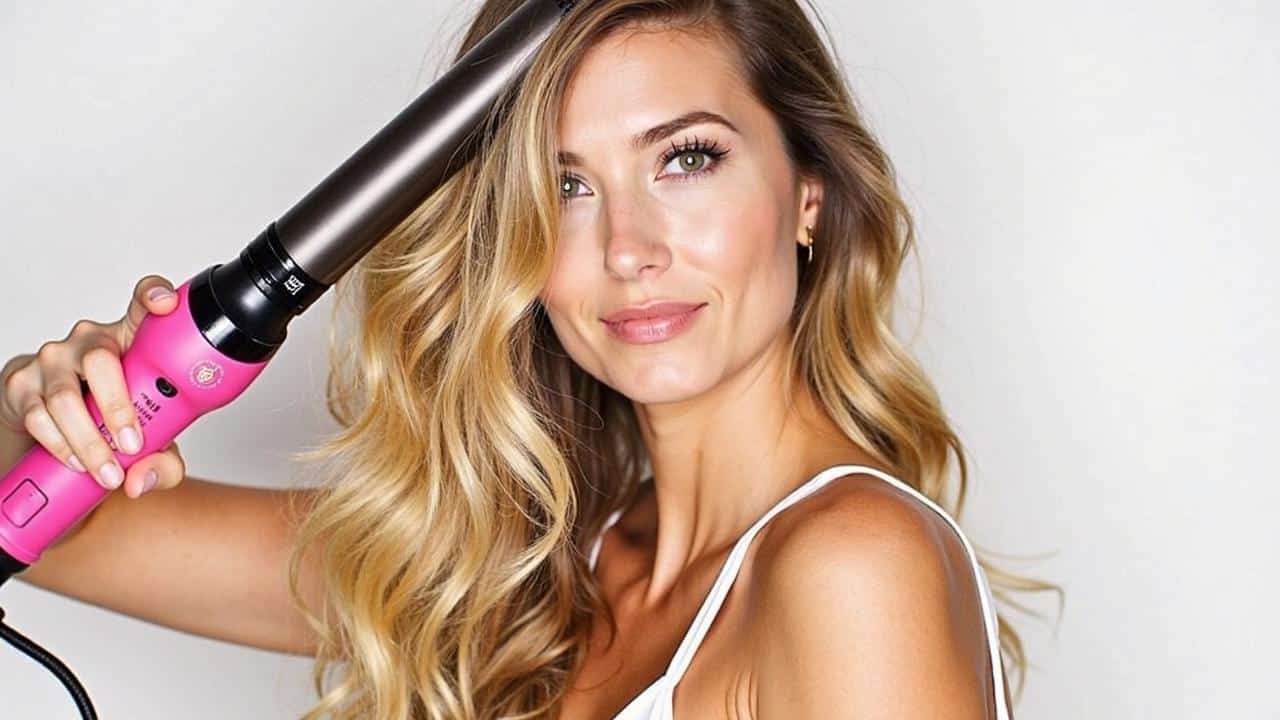
The curler felt hot before it even touched my hair. I watched a strand sizzle for a second too long in the bathroom mirror and had that familiar flash of panic: “Is this the day it finally snaps off?” The irony hit me. Trying to look like I’d just strolled off a beach in Malibu, while slowly frying my hair in a rental apartment with fluorescent lighting and a half-dead plant in the corner.
There had to be another way.
That night, scrolling through TikTok with a towel on my head, I saw girl after girl waking up with perfect waves… and not a curling iron in sight. No burns. No smoke. No drama.
Something in me said: okay, we’re done with the damage.
Why heatless waves are having a real moment
The first time you see a full head of glossy beach waves created with nothing but a long sock and a scrunchie, it feels like a magic trick. Your brain almost refuses to accept that this can replace an expensive curling wand. Yet there’s a reason these videos rack up millions of views.
People are exhausted by the breakage, the split ends, the brittle ponytails that feel like straw by Friday. We still want the cool-girl, “I just rolled off a surfboard” texture. We just don’t want to sacrifice half our hair to get there.
One woman I interviewed, Anaïs, used to curl her hair with a flat iron five days a week before her office job. At 27, she started noticing her front pieces thinning and breaking right where the iron clamped. “I thought something was wrong with my health,” she told me. “Then my hairdresser asked how often I was ‘cooking’ it.”
She switched to heatless curling methods out of fear more than curiosity. After three months of overnight styling with a robe belt and a bit of lightweight mousse, she went back for a trim. Her hairdresser stared at her for a second and said, “Whatever you’re doing, keep doing it.” The shine was back. So was the bounce.
Hair is basically a delicate protein structure. Every time we blast it with high heat, the internal bonds that give it elasticity and shape are altered. That’s why curls fall flat faster on over-processed hair and why ends start looking fluffy instead of defined.
Heatless curlers work differently. They nudge those bonds into a new pattern slowly, while hair is damp and flexible, then let them set as it dries. The result feels less forced, less stiff, and more like your hair’s own version of a wave pattern rather than a stamped-in curl. It’s slower.
➡️ Furry nails trend: flocking powder tutorial for textured manicures
➡️ Centella ampoule serum: soothe redness and heal acne scars
➡️ Beetlejuice lips: viral ombre tutorial for bold halloween vibes
➡️ Evolutionary psychology: how facial symmetry boosts attraction signals
➡️ Red light wand therapy: erase fine lines in just 10 minutes daily
➡️ Adaptive beauty perception: how culture shapes attractiveness ideals
➡️ Master purple blush: the runway trend transforming cheek contours
➡️ Milky toner magic: hydrate and balance oily skin overnight
But that slower pace is exactly why it works.
5 heatless curler hacks for real, salty-looking beach waves
Hack 1: The robe-belt wrap you sleep in once and keep reusing for days.
Take the belt from a soft bathrobe or a long, cushy scarf. Place it on top of your head, like a soft headband with the ends hanging down on each side. On slightly damp hair, divide your hair into two sections. Twist one front strand around the belt, pick up a new strand, wrap again, and repeat, working backward until you reach the ends. Secure with loose scrunchies, then repeat on the other side.
You’ll look slightly ridiculous. You’ll also wake up with loose, flowing waves that genuinely pass the “beach but better” test.
The biggest mistake people make with this hack is wrapping hair that’s too wet or too dry. If it’s dripping, you’ll wake up with heavy, limp curls and possibly a damp pillow. If it’s bone dry, the shape won’t hold. You want that in-between stage: towel-dried, about 75–80% dry, where hair feels cool to the touch but no longer leaves marks on your shirt.
Think of it like setting jelly: the texture has to be right for it to hold.
Be kind to your scalp too. If the robe belt is tugging at your roots or giving you a headache as you lie down, unwrap and rewind with a looser tension. Waves created under stress always look tense.
Hack 2: The sock spiral for soft, beachy ends when you’re short on time.
Grab four clean, long socks. Split your hair into four sections. Starting midway down each section, wind the hair around the sock until you reach the ends, then fold the sock back on itself and tie a loose knot. You don’t touch your roots. That’s the secret: the roots stay a bit straighter, the ends flip and wave, like you’ve spent a few hours in salty air.
*It’s the laziest way to fake a weekend by the sea on a Tuesday morning.*
Small tweaks that change everything: product, timing, and texture
Hack 3: Prep like a pro, even if you’re not one.
Before wrapping or rolling anything, work a pea-sized amount of lightweight curl cream or wave spray through your damp mid-lengths and ends. Avoid heavy oils at the start; they can weigh the pattern down. Comb through with your fingers so there are no sneaky knots hiding anywhere.
Think about timing too. If you’re doing overnight curls, don’t start five minutes before bed with soaking-wet hair. Give it at least 30–40 minutes of air-drying first. Your scalp will thank you, and your waves will set faster and more evenly.
Hack 4: Use your fingers like a diffuser.
Morning comes, you pull out the socks, robe belt, or satin ribbon, and you’re staring at curls that look a bit… intense. Don’t panic and don’t grab a brush. Instead, flip your head upside down and gently rake through your hair with your fingers, separating larger pieces into smaller waves.
We’ve all been there, that moment when you see yourself in the mirror and think, “Okay, this might be too much.” That’s when a tiny bit of lightweight hair oil on your fingertips can rescue the look. Glide it over the ends, scrunch once or twice, then stop. Let’s be honest: nobody really does this every single day. But the days you do, it shows.
Hack 5: The “no-tools” beach wave cheat on hair that’s already dry.
On fully dry hair, spray a light mist of water mixed with a bit of sea salt spray. Braid your hair into two or four loose braids, depending on how tight you want the waves. Hit each braid very briefly with a cool setting on your dryer, not to heat it, just to speed up the drying of that mist. Leave for an hour while you work, answer emails, or clean the kitchen. Undo the braids and fluff with your fingers.
“I stopped thinking of styling as an event and started seeing it as something that happens around my life,” a hairstylist told me. “That’s when I finally stuck with heatless curls.”
- Use soft fabrics (satin, silk, old cotton t-shirts) to wrap or secure your hair.
- Aim for slightly damp, never dripping-wet hair before styling.
- Loosen curls with fingers, not a brush, to keep the beach texture.
- Add product after unwrapping only if your hair looks frizzy, not before by default.
- Sleep on a satin pillowcase to stretch your waves to day two or three.
A new relationship with your hair, one night at a time
Once you’ve tried a few of these hacks, something shifts. Styling your hair stops being a rushed, slightly frantic ritual with hot tools scattered across the sink and a faint smell of burning in the air. It becomes quieter. You wrap, twist, or braid at night, then go back to your life.
The next morning feels a bit like opening a present you packed yourself but still half forgot about. Some days the waves are looser, some days more defined, sometimes one piece refuses to cooperate. Yet the overall impression is softer, more lived-in, more you.
You might notice other things changing too. Less snapping when you brush. Fewer broken hairs on your sweater. A ponytail that feels thicker in your hand. One small choice — swapping heat for time — starts rippling through the rest of your routine.
You stop chasing perfection and start chasing texture that actually matches the way you move through your day. **Beach waves stop being a look you borrow** and start becoming a shape your own hair remembers. That’s when these low-tech tricks stop being hacks and quietly turn into habits you don’t really want to give up.
| Key point | Detail | Value for the reader |
|---|---|---|
| Robe-belt wrap | Overnight wrap on slightly damp hair for full, soft waves | Hands-off styling while you sleep, no heat damage |
| Sock spirals & braids | Target mid-lengths and ends, roots stay relaxed | Natural, beachy movement instead of stiff, uniform curls |
| Prep & finish | Light product on damp hair, finger-combing to loosen | Longer-lasting waves with shine, less frizz and breakage |
FAQ:
- Question 1Can I do heatless curls on very straight, hard-to-curl hair?Yes. You’ll get the best results if you start on slightly damp hair, use a light mousse or wave spray, and leave the curls to set at least six to eight hours before unraveling.
- Question 2How often can I use heatless curlers without damaging my hair?Every day if you want. As long as you’re not pulling too tightly at the roots and you’re using soft fabrics, the mechanical stress is minimal compared to daily heat.
- Question 3Do I need special products for heatless beach waves?No, but a lightweight styling cream, mousse, or sea salt spray helps the shape last longer. Avoid very heavy oils at the start of styling so your hair doesn’t collapse.
- Question 4What if I wake up and my waves look too tight or uneven?Gently separate them with your fingers, twist a few sections away from your face, and apply a pea-sized amount of hair oil or serum to the ends to soften everything.
- Question 5Can I combine heatless curls with occasional hot tools?Yes. Many people use heatless methods most days and reserve a curling iron for special occasions. Your hair will still benefit hugely from the reduced overall heat exposure.