The sweat has barely dried and your skin is already complaining. Red patches along the sports-bra line, a sting on the neck where the towel rubbed too hard, that tight, itchy feeling around your jaw after a spin class. You catch your reflection in the locker room mirror and it’s not “post-workout glow” at all, it’s irritation on the verge of a breakout.
You pull out your usual toner, hesitate, and slide it back. Too harsh. Too late. Your skin wants something that works fast, but feels like almost nothing.
Someone two lockers down casually mists their face, chest, even their armpits with a small white bottle. No rubbing. No fuss. Just a thin cloud of spray and calmer-looking skin.
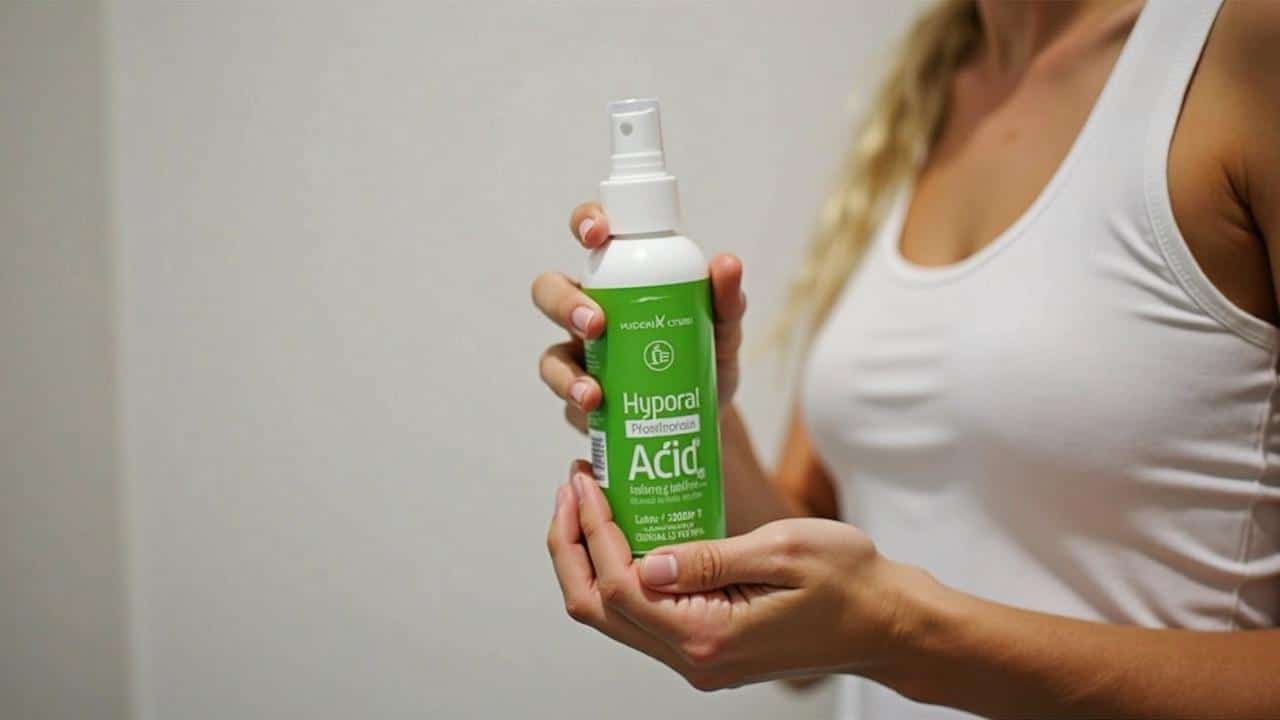
That quiet little bottle? Hypochlorous acid spray. And it’s quietly taking over gym bags.
Why your skin freaks out after a workout
Step off a treadmill and your skin is having a full-blown moment. Heat, friction, salt from sweat, bacteria trapped under tight fabrics – it’s a rough cocktail. Your cheeks feel hot, your chest gets blotchy, and that sports bra band suddenly turns into a red, angry line.
Dermatologists even have a name for it: exercise-induced irritation. It doesn’t sound glamorous, and it doesn’t feel glamorous either.
This is the moment when we usually grab whatever’s closest – a makeup wipe, a random “refreshing” spray, a bit of leftover micellar water. And that’s often when the damage doubles.
Picture this. You smash a HIIT class at 7 a.m., rush to the changing room, and swipe a fragranced wipe across your already flushed skin. It tingles, then it burns. By lunchtime, little bumps crop up along your hairline. The next morning, there’s a new breakout on your back where your sports bra rubbed.
You think, “Guess my skin just hates workouts.” So you start skipping classes before big meetings or nights out, just so you don’t trigger another flare-up.
The thing is, it’s rarely the workout alone. It’s the mix of sweat, bacteria, tight clothing, and harsh products layered on top of already stressed skin.
➡️ Ethical beauty mindset: balancing enhancements with authenticity
➡️ Thermal brush styling: smooth frizz for salon-worthy blowouts
➡️ Proactive preventative skincare: exosomes for long-term youth
➡️ Beetlejuice lips: viral ombre tutorial for bold halloween vibes
➡️ Why snail serum is the 2026 skincare secret for glowing skin
➡️ Evolutionary psychology: how facial symmetry boosts attraction signals
➡️ Cherry cola hair color: blend reds and browns for fall depth
➡️ Furry nails trend: flocking powder tutorial for textured manicures
Skin after a workout is like a door left half open. Heat and sweat temporarily weaken the barrier, pores are dilated, and micro-abrasions from towels or straps become tiny entry points. Aggressive cleansers and strong actives walk straight through that open door and start shouting.
That’s why so many “post-gym routines” backfire. They’re designed for dirty skin, not for hot, sensitized skin.
The logic with hypochlorous acid spray is different. It doesn’t scrub, strip, or sting. It steps in like a quiet bouncer, clears the crowd of troublemakers, and lets the skin reset without a fight.
How hypochlorous acid spray soothes post-workout skin fast
Hypochlorous acid sounds like something you’d find in a lab, not a gym bag. Yet your body already knows it very well. Your white blood cells naturally produce this molecule to calm inflammation and neutralize unwanted bacteria.
In spray form, it becomes this ultra-fine mist you can use right after a workout: face, body, even under your waistband or along your sports bra line. No rubbing, no cotton pads. Just spray, let it sit, and let it air dry.
It feels like water. But skin often looks noticeably less red within minutes.
Here’s a typical scene people describe once they start using it. You’re leaving a hot yoga class, face flaming, mask-ready but not breakout-ready. Instead of scrubbing at a sink, you step aside, pull out a small hypochlorous spray, and mist your face, neck, and chest.
You wait a minute while you scroll your phone, then gently pat off excess sweat with a soft towel. No tightness, no perfumed sting, no “I overdid it” feeling.
By the time you get to work, your skin isn’t raging. That usual red ring where your leggings cut in? Less visible. Those rough little bumps along your jaw? Not as angry.
Behind that almost boring routine sits a very simple chain reaction. Sweat plus bacteria plus friction equals micro-inflammation and the start of breakouts. Hypochlorous acid interrupts that chain. It’s antimicrobial, so it lowers the bacterial load on the skin’s surface, and at the same time it’s surprisingly gentle on the skin barrier.
No alcohol, no oils, no heavy film. Just a neutralizing mist that respects the fact that your skin is already worked up.
Let’s be honest: nobody really does a perfect, 10-step post-gym skincare routine every single day. A spray you can use in ten seconds in a crowded locker room? That actually gets done.
A simple post-workout routine that doesn’t fight your skin
The most realistic way to use hypochlorous acid spray is to treat it like your first-aid step, not a fancy extra. Right after your workout, before scrolling, before chatting, before touching your face with sweaty hands, you spray.
Hold the bottle about a hand-length away and mist generously over the areas that tend to flare: face, chest, back of the neck, under your sports bra line, along your waistband. Let it sit for 30–60 seconds.
Then, if you can, rinse your face with lukewarm water or use a very gentle, non-foaming cleanser. Pat dry, don’t rub, and if your skin still feels hot, you can spray a second light layer and leave it on.
A common mistake is treating hypochlorous spray like a perfume mist – two half-hearted spritzes in the air and walking through it. That looks chic, but your skin barely notices. You want actual contact: a fine, even layer on the skin.
Another trap is mixing it immediately with strong acids or retinoids while your skin is still red from exercise. Post-workout is recovery time, not “let’s test how much my face can take.”
Be gentle with the hardware too. Rough gym towels, tight headbands, and non-breathable caps undo half the calming work you’re trying to achieve. *If your skin always feels punished after you move your body, something in the routine needs softening, not strengthening.*
“People think you need harsh products to ‘disinfect’ after sweating,” says a London-based dermatologist I spoke with. “In reality, your barrier is more vulnerable right after a workout. Hypochlorous acid gives you the antimicrobial benefit without kicking your skin when it’s down.”
- Use it on clean or sweaty skin
You don’t have to be freshly washed. Spraying straight onto post-workout sweat is fine, then rinsing or gently wiping later. - Keep it fragrance-free
A simple formula with hypochlorous acid, water, and minimal stabilizers tends to be the most comfortable on irritated or acne-prone skin. - Think beyond the face
Spray under sports bra straps, along waistbands, on the back and shoulders – anywhere sweat, friction, and fabric meet. - Pair with lightweight hydration
Once skin is calm and cool, follow with a light gel moisturizer if you tend to get tightness after you wash. - Be consistent, not obsessed
You don’t need twenty sprays a day. Post-workout and after long, sweaty commutes are usually enough to see a difference.
Calmer skin, better workouts, less drama
Something interesting happens when your skin stops punishing you for moving your body. You’re more likely to say yes to that evening class, to keep your camera on for post-gym meetings, to actually enjoy the endorphins instead of dreading the mirror the next morning.
Hypochlorous acid spray won’t turn you into a different person. It won’t erase every breakout or fix a lifetime of skin sensitivity. But it can quietly remove one big source of friction: that cycle where every workout equals three days of irritated, bumpy, or angry skin.
People who stick with it often talk less about “perfect skin” and more about relief. Less burning under bra straps. Fewer new spots where the helmet rubbed. Less redness that lingers for hours in the cheeks.
You might find yourself slipping a small bottle into your bike basket, your work tote, your festival bag. Lending it to a friend after a run. Debating which one to buy next, comparing mists the way we used to compare dry shampoos.
The more we admit that sweat, bacteria, and tight fabrics are part of regular life, the easier it becomes to choose tools that work with us, not against us. Sometimes that tool is surprisingly simple, clear, and almost invisible on the skin – and still quietly life-changing.
| Key point | Detail | Value for the reader |
|---|---|---|
| Post-workout skin is sensitized | Heat, sweat, and friction weaken the skin barrier and fuel redness and breakouts. | Helps you understand why your usual routine backfires after exercise. |
| Hypochlorous acid calms without stripping | Antimicrobial yet gentle, mimicking a molecule your immune system already produces. | Provides a fast, low-risk way to soothe irritation and reduce post-gym flare-ups. |
| Simple spray routine fits real life | 10-second mist on sweaty areas, then light cleansing and hydration if needed. | Makes consistent skin care realistic, even in crowded locker rooms or busy mornings. |
FAQ:
- Can I use hypochlorous acid spray every day?Yes. Most formulas are gentle enough for daily, even multiple-times-a-day use, especially on sweaty or irritated areas.
- Will it dry out my skin?Most people find it feels like water and doesn’t dry the skin, but if you’re very dry, follow with a light moisturizer once your skin cools down.
- Is it safe for acne-prone or sensitive skin?That’s exactly where it’s often most useful. It helps reduce surface bacteria without harsh scrubbing or strong acids.
- Do I still need to wash my face after the gym?The spray isn’t a full cleanser. It’s a calming, antimicrobial step. Rinse or gently cleanse when you can, especially if you’ve worn makeup or SPF.
- Can I spray it on my body, not just my face?Absolutely. Use it on chest, back, under straps, helmet lines, or anywhere prone to sweat-related irritation or “bacne.”