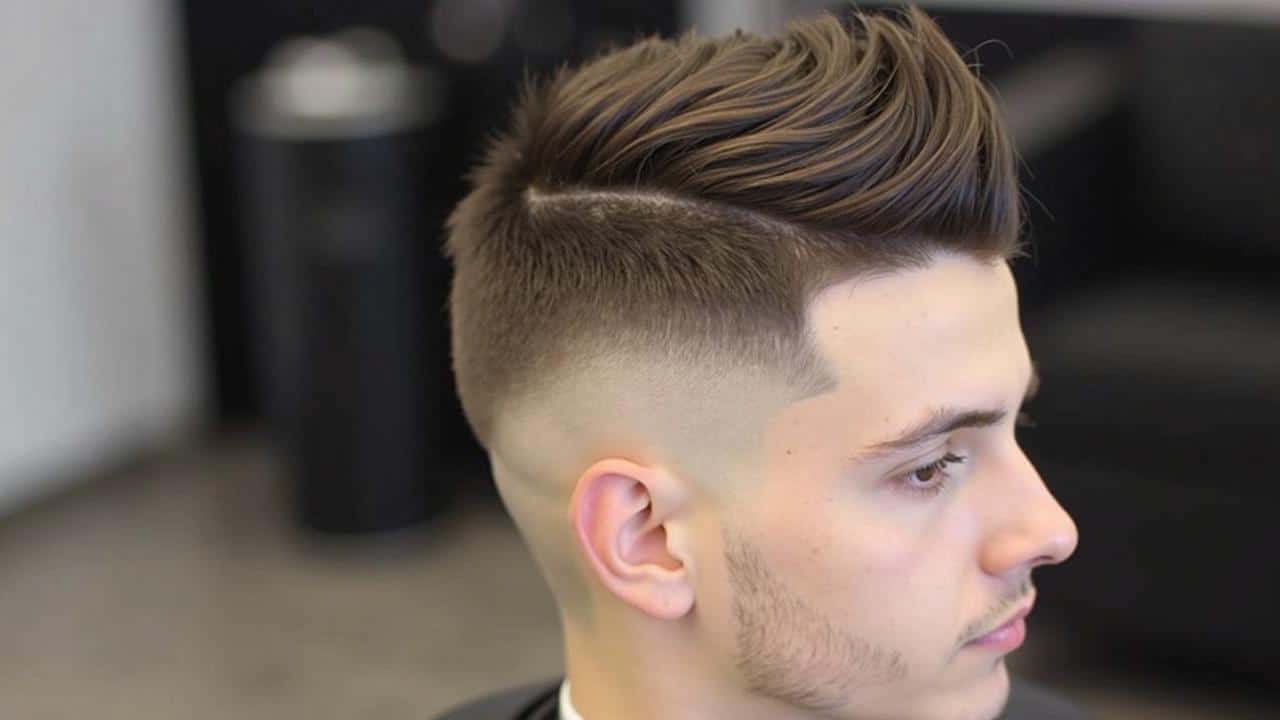
The ring light hums softly in the corner of the barbershop, catching the tiny hairs floating in the air like dust in a sunbeam. A guy in a faded hoodie is glued to his phone, scrolling through Instagram cuts, pausing on the same image every time: a perfect high burst fade, razor-sharp edge up, temple popping like a clean graphic line. He turns the screen to his barber. No words. Just that picture.
The barber smiles, clips in hand, because this request has become the new classic.
Everyone wants that crisp arc behind the ear, that tight fade that explodes from nothing to texture.
Not everyone walks out with it.
Why the high burst fade has taken over barbershop chairs
The high burst fade sits in that sweet spot between street and polished, and that’s exactly why so many people are chasing it. It frames the ear like a spotlight, lifts the cheekbones visually, and keeps the hairline looking sharp without feeling old-school or stuffy.
You see it on rappers, TikTok guys, even office workers who quietly swap their safe taper for something bolder.
The cut hugs the ear and “bursts” out behind it, fading high into the temple, which gives the face a slimmer, more angular look. On photos and reels, it just hits differently.
Sit in a busy shop on a Saturday and you’ll spot the pattern. A teenager walks in with a screenshot of a high burst fade on curly hair. Then a guy in his thirties with a beard wants the same thing, but shaped tight enough for Monday meetings.
One barber in London told me he does the high burst fade “ten, twelve times a day on weekends”. He pointed to a client in the chair and said, “Three months ago, this man didn’t know what a burst fade was. Now he’s back for the third time with the same Pinterest board.”
That’s how trends really move: one clean cut, one well-lit selfie, and a dozen friends suddenly want the same edges.
➡️ Boho bob haircut: wavy layers for casual chic vibes
➡️ Evolutionary psychology: how facial symmetry boosts attraction signals
➡️ Proactive preventative skincare: exosomes for long-term youth
➡️ Adaptive beauty perception: how culture shapes attractiveness ideals
➡️ Glass skin routine: essence stacking for mirror-like radiance
➡️ Why snail serum is the 2026 skincare secret for glowing skin
➡️ Cherry cola hair color: blend reds and browns for fall depth
➡️ Milky toner magic: hydrate and balance oily skin overnight
There’s a reason this cut feels so modern. Classic low fades and tapers keep the weight around the ear, which softens the side profile. The high burst fade strips that bulk away fast, then curves up, almost like a graphic designer redrew the outline of your head.
Technically, the fade climbs higher toward the temple while staying tight down to the skin around the ear. That “burst” shape is what stops it from looking like just another high fade.
The sharpness of the lineup around the forehead and beard then acts as a frame, turning the whole look into something that photographs incredibly well. When people say “camera-ready cut”, **this is what they mean**.
Precision tips for a sharper, cleaner high burst fade
A clean high burst fade doesn’t start with the clippers. It starts with the map in your head. A good barber will first draw the fade in their mind: where it starts at the sideburn, how it curves around the ear, where it dies out at the back of the head.
For sharp modern edges, the first move is setting a clear guideline with the trimmer or clipper with no guard. The arc around the ear should feel like a half-moon, not a straight line hacked into the side.
Then comes the guard work: 0.5, 1, 1.5, climbing as you move out from that “burst” point. Each move is short, controlled, and always in the same direction. That’s how you dodge those ugly steps.
Most people only see the end result on social media, not the tiny adjustments that keep the fade consistent. A lot of DIY attempts go wrong at the ear: someone goes too high on one side, panics, then chases symmetry until both sides are over-faded.
The second major trap is rushing the blend where the fade meets the top. If there’s too much contrast, you get a helmet look instead of a smooth burst. Too little, and the fade disappears on camera.
We’ve all been there, that moment when you stare at your haircut in the mirror and realize the fade looked better in your head than on your actual skull. That’s why patience and small, repeated strokes matter way more than aggressive buzzing.
On the barber side, there’s a plain truth most clients never hear: the cleanest high burst fades are usually the most minimal in technique. Fewer guards, more control. More comb work, less rushing.
One barber I spoke to in Paris summed it up in a single sentence:
“People think a crazy fade is about fancy tools. Really, it’s about not trying to fix the haircut every five seconds.”
To keep it concrete, here’s what separates a sharp modern high burst fade from a messy one:
- Defined starting line around the ear, drawn gently, not carved too deep
- Short, overlapping clipper strokes instead of long, random passes
- Regular checks in the mirror, from a distance, to see the overall shape
- Razor or detail trimmer used last, only to clean edges, not to “shape” the fade
- Product used lightly to lift texture on top, not to hide mistakes on the sides
Living with a high burst fade: maintenance, identity, and small rituals
The first week with a high burst fade is heaven. Your jawline feels more defined, your selfies suddenly look like they’ve been subtly retouched, and even a basic hoodie-and-cap combo looks intentional.
By day ten or twelve, reality arrives. The fade softens, the line-up blurs, the hair behind the ear starts creeping back. You can ignore it for a while, but the camera doesn’t. *This is when you learn that the sharpest cuts demand the most loyalty.*
Most people land on a rhythm: every 10–14 days for a fresh fade and edge up, every 3–4 weeks if they want to keep it more low-key. Let’s be honest: nobody really does this every single day.
There are small at-home rituals that stretch the life of your burst fade. A soft brush to keep the grain of the hair consistent. A light moisturizer or oil around the hairline so the skin doesn’t ash and kill the contrast. Sleep on a satin pillowcase or wear a durag/bonnet if your hair type needs it.
The big mistake? Grabbing clippers and “just touching up” your own fade behind the ear. That curved area is unforgiving, and most self-fixes turn into emergency hat weeks.
If you really want to help your barber, focus on care, not cutting: don’t arrive with product caked in, and communicate whether you prefer your burst tight to the skin or with a tiny bit of shadow.
Some people find that the high burst fade becomes part of their identity surprisingly fast. One guy told me, “I grew out my hair for two months and my friends thought something was wrong with me.” The cut had become his visual signature.
Another barber put it this way:
“When the burst fade grows out right, it tells people you care about details without trying too hard. That’s why people stick with it.”
If you’re playing with the idea yourself, these questions help:
- Do you like your ears and cheekbones visually exposed, or do you prefer softer sides?
- Can you realistically visit the barbershop every two to three weeks?
- Are you okay with a few “in-between” days when the fade is growing out?
- Does your work environment accept bolder, sharper haircuts?
- Are you willing to show your barber clear reference photos from multiple angles?
| Key point | Detail | Value for the reader |
|---|---|---|
| Fade mapping | Visualizing the curve and height of the burst before cutting | Reduces uneven sides and “chasing symmetry” mistakes |
| Clean guideline | Setting a soft but clear initial line around the ear | Creates that graphic, modern shape seen on social media |
| Maintenance rhythm | Touch-ups every 10–14 days, plus simple at-home care | Keeps the fade sharp longer without constant barber visits |
FAQ:
- How often should I get a high burst fade redone?Most people refresh the fade and edges every 10–14 days. If you like it super crisp, weekly visits keep it photo-ready.
- Does a high burst fade work on straight hair?Yes, but the contrast is more visible, so the blend needs to be extra clean. A bit of texture on top helps it look less flat.
- Can I get a high burst fade if I have a receding hairline?Often, yes. The sharp edges and curved fade can actually distract from recession, as long as your barber respects your natural hairline.
- What should I tell my barber if I’m nervous about going too high?Ask for a “medium-high burst fade” and say you want some shadow left, not full skin. Show side-view photos of what you like.
- Is a high burst fade professional enough for office jobs?In many modern workplaces, yes, especially if the top is kept neat and the edges are clean rather than extreme. The context of your industry matters more than the cut itself.