The shine started around 11 a.m.
You know the one: that slow, creeping glow across your T-zone that no powder can fully hide. You went to the office bathroom “just to check your hair” and left blotting your nose with a paper towel, wondering how your face could feel tight and greasy at the same time. The products lined up on your sink promise balance, mattifying power, blurred pores. Yet by night, your cheeks sting and your forehead still looks like a mirror.
That night, scrolling skin-care videos in the blue light of your phone, one odd phrase kept coming up: “milky toner.”
Soft. Cloudy. Not a harsh astringent, not quite a serum.
You stared at the screen and thought, “Can a watery milk really fix this?”
The next morning, your pillowcase quietly answered.
Why oily skin is secretly thirsty
The first time you pat on a milky toner at night, the texture throws you off.
It’s not that sharp, stingy liquid that smells like nail polish remover, and it’s not thick like a cream. It slips between your fingers like watered-down lotion, leaving a faint, dewy veil. You go to bed a little skeptical, half expecting to wake up with a breakout. Instead, you catch your reflection in the morning and your face looks…calmer. Less frantic.
Not matte like a desert, not shiny like glass.
Just quietly rested, as if your skin finally stopped yelling for help.
Take Lena, 27, who had been “punishing” her oily skin since high school.
For years she used foaming cleansers twice a day, alcohol-heavy toners, clay masks that cracked if she smiled. Her skin fought back: more sebum, more redness, more random breakouts right before important meetings. She thought she just needed stronger products.
Then a friend slipped a small bottle of milky toner into her bag and said, “Try this for a week. Nothing else new.”
By day three, her forehead wasn’t producing that midday oil slick. By day seven, her cheeks weren’t blotchy and tight after cleansing. She didn’t change her diet or her makeup. She just gave her skin water instead of war.
Here’s the plain truth: oily skin is often just dehydrated skin in survival mode.
When the surface is stripped dry, the sebaceous glands go into overdrive, trying to compensate. So you reach for harsher, more “purifying” products, which rip out even more moisture, and the cycle loops. Milky toners disrupt this loop. They are built to hydrate first, then quietly support the barrier with light humectants and soothing agents.
By feeding the skin water and comfort at the same time, they signal to your oil glands that the emergency is over.
Less panic, less oil, less shine that screams across your face halfway through the day.
How to use milky toner so it works while you sleep
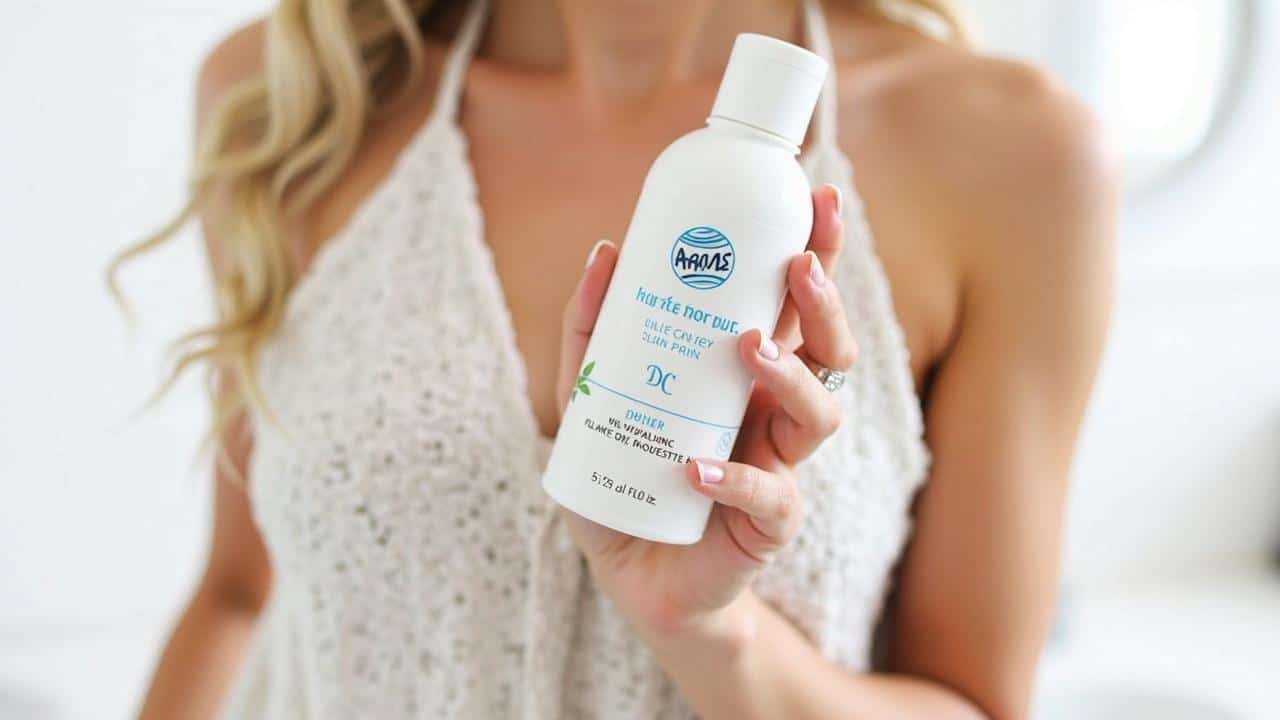
Think of your nighttime milky toner as the first glass of water your skin drinks after cleansing.
Start with a gentle, low-foam cleanser that doesn’t leave your face squeaky. Pat your skin with a towel until it’s damp, not dry. Then pour a small puddle of milky toner into your palm, warm it between both hands, and press it into your face. No rubbing, no dragging. Just palms, cheeks, forehead, chin, neck.
➡️ Ethical beauty mindset: balancing enhancements with authenticity
➡️ Red light wand therapy: erase fine lines in just 10 minutes daily
➡️ Butter yellow nails: soft pastel polish ideas for spring vibes
➡️ The halo effect explained: beauty's hidden impact on career success
➡️ Thermal brush styling: smooth frizz for salon-worthy blowouts
➡️ Confidence from within: how self-perception alters beauty standards
➡️ Boho bob haircut: wavy layers for casual chic vibes
➡️ Centella ampoule serum: soothe redness and heal acne scars
If your skin feels especially tight, repeat a second thin layer.
Let it sink in for one or two minutes before your usual light serum or gel-cream.
A common mistake is treating milky toner like a cotton-pad “police check” for leftover makeup.
You don’t need to scrub at your skin with it. That’s how you end up angry and red, thinking the product “didn’t work.” Another trap is layering it under a very heavy, occlusive cream designed for dry skin. On oily or combination skin, that combo can feel suffocating and trigger clogged pores.
Go lighter than you think at first.
And if one night you’re too tired and crash without your full routine, don’t beat yourself up. Let’s be honest: nobody really does this every single day.
“The night I stopped attacking my oily skin and started comforting it with a milky toner, everything changed,” a dermatologist friend told me. “You can’t bully a skin barrier into balance. You have to negotiate with it.”
- Use at night on damp skin
This boosts hydration, as humectants in the toner grab onto the leftover water on your face. - Look for calming, non-comedogenic formulas
Think niacinamide, panthenol, oat, glycerin, light-weight oils; skip heavy fragrance if your skin is reactive. - Keep acids low and gentle
A touch of PHA or low-percent BHA is fine, but your milky toner shouldn’t feel like a peel in disguise. - Give it at least 3–4 weeks
Skin balance isn’t instant, especially if your barrier has been under attack for years.
Rethinking “oily”: from enemy to ecosystem
Something shifts the moment you stop calling your skin “gross” or “dirty” and start treating it like a system trying its best.
Sebum isn’t the villain. It’s part of your natural defense, your built-in moisturizer. The real problem starts when the barrier is damaged and the messages get scrambled. Milky toners speak softly to that system. They don’t shout. Their job is to cushion, to soothe, to send water deep enough that your skin doesn’t need to flood the surface with oil overnight.
*The magic isn’t that they are milky; the magic is that they are kind.*
Kind products invite your skin to calm down.
You might notice the most surprising change not in your pores, but in your habits.
When your skin wakes up balanced, you swipe on less foundation. You skip the midday blotting paper, or use one instead of five. You don’t zoom in so much in every selfie, hunting for glare. You catch yourself touching your face less, because it no longer feels sticky or raw.
That quiet mental relief is underrated.
Oily skin can be a constant low-level worry, a background noise in your day. A simple milky toner at night turns down the volume.
Of course, no single bottle is a miracle. Sleep, hormones, diet, stress, climate—all of it plays a role. But this small, cloudy liquid can become a hinge moment in your routine, the place where you swapped aggression for patience. You may still have shine on a humid summer commute, or a random breakout before your period. That’s life, not failure.
The difference is that your base line—your everyday skin—feels more even, less reactive, more “you.”
And that feeling, when you catch your reflection in the soft morning light and don’t immediately reach for a mattifying primer, is its own kind of quiet magic.
| Key point | Detail | Value for the reader |
|---|---|---|
| Hydration calms oil production | Milky toners flood dehydrated oily skin with water-binding ingredients at night | Less rebound shine, smoother texture by morning |
| Application method matters | Pressed into damp skin with hands, in light layers, under a simple gel moisturizer | Maximizes benefits without clogging pores or causing irritation |
| Barrier-first mindset | Switching from stripping products to barrier-supportive care | Fewer flare-ups, less redness, more predictable skin day to day |
FAQ:
- Can milky toner cause breakouts on oily skin?It can if the formula is too rich or heavily fragranced for you, but most lightweight, non-comedogenic milky toners actually reduce congestion by calming the barrier and cutting rebound oil.
- Should I use milky toner morning and night?You can, but many people with oily skin see the best results focusing on nighttime, when the skin repairs itself; mornings, a lighter hydrating mist may be enough.
- Do I still need a moisturizer after a milky toner?Yes, though for oily skin a gel-cream or very light lotion is usually plenty on top; the toner is your water layer, the moisturizer is your seal.
- Will milky toner shrink my pores?It won’t literally change pore size, but by hydrating and reducing excess oil, pores often look less obvious and makeup sits more smoothly.
- How long until I see results?Some people notice calmer, less shiny skin after a few nights, but a realistic window is three to four weeks of consistent use to see a stable change.