You’re on a busy subway, scrolling your phone, half-awake. Across the aisle, someone steps in. You glance up, just for a second. You don’t know them, you don’t know their story, but your brain does this tiny jolt of recognition: “Wow.” You look again, just a bit longer this time, trying to figure out why they stand out in a crowd of perfectly ordinary faces.
Their skin isn’t flawless, their nose isn’t textbook perfect. Still, their features seem to “click” together like pieces of a puzzle that were always meant to fit. Your gaze bounces left, right, left, tracing a kind of invisible axis.
You’re not calculating angles, of course. But a very old part of your mind quietly is.
The secret code your brain reads in a fraction of a second
Psychologists have known for years that we don’t just see faces. We scan them. Fast. Almost like a built‑in facial recognition app that runs quietly in the background every time we meet someone new. One of the first things this mental software checks, without you noticing, is how balanced each side of the face is.
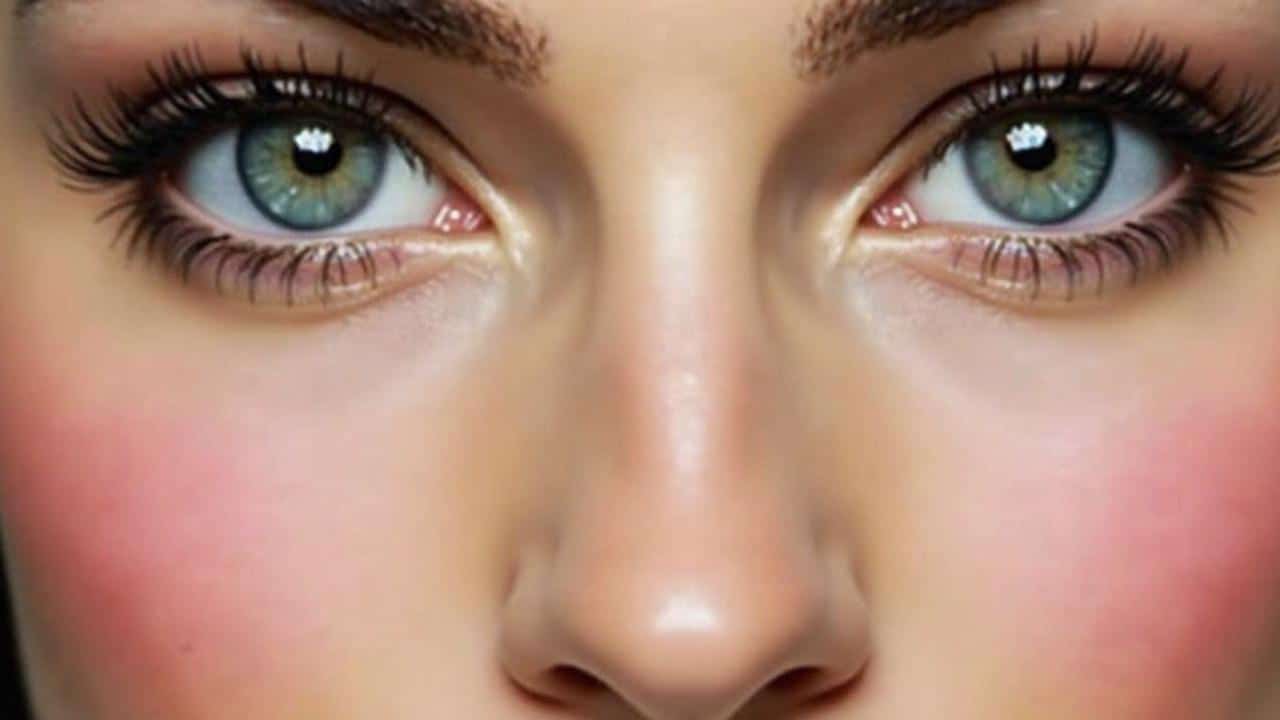
That balance has a name: facial symmetry. Not mathematical perfection, not clone-like left and right halves, just a broad harmony between both sides. And again and again, studies show the same pattern. Faces with more symmetry are rated as more attractive across cultures, ages, and even eras.
Your brain is reading signals you never consciously asked to see.
Picture a classic psychology lab experiment. Volunteers sit in front of a screen while pairs of faces flash by. Sometimes they’re real faces, sometimes they’re subtly edited so one side mirrors the other almost perfectly. Participants have barely a second to decide: which face is more attractive?
Time after time, the more symmetrical faces “win” the beauty contest. It doesn’t matter if the volunteers are men or women, used to Western media or from remote communities with limited exposure to magazines and filters. The trend holds. One study even showed infants staring longer at symmetrical faces, as if their tiny brains already knew.
Before we learn fashion, we’re already wired for balance.
Evolutionary psychologists have a simple idea to explain this. Over thousands of generations, humans who could quickly spot healthy, fertile partners had a biological advantage. Symmetry in a face tends to correlate, statistically, with fewer developmental glitches, better immune function, and overall robustness. Not perfect health, but fewer things that went dramatically wrong during growth.
➡️ Confidence from within: how self-perception alters beauty standards
➡️ Boho bob haircut: wavy layers for casual chic vibes
➡️ Hypochlorous acid spray: calm irritated skin post-workout fast
➡️ Milky toner magic: hydrate and balance oily skin overnight
➡️ Beetlejuice lips: viral ombre tutorial for bold halloween vibes
➡️ Why snail serum is the 2026 skincare secret for glowing skin
➡️ Glass skin routine: essence stacking for mirror-like radiance
➡️ Ethical beauty mindset: balancing enhancements with authenticity
So our brains evolved a fast, cheap shortcut. Instead of running a full medical check-up, they learned to treat symmetry as a rough “health signal.” That doesn’t mean asymmetrical faces are unhealthy, or that symmetrical people have perfect lives. Reality is messier than that.
It just means your attraction radar is older than your dating apps.
How symmetry sneaks into your selfies, crushes, and daily mirror ritual
Next time you open your front camera and flinch, pause for a second. Part of that shock comes from seeing your face the way others see it, not the mirrored version you know from the bathroom. Tiny asymmetries suddenly pop out. One eyebrow higher, a lip corner that curves differently, the jawline sharper on one side.
You start tilting the phone, rotating your neck, instinctively hunting for an angle that balances things out. That’s not vanity, that’s instinct. You’re chasing the version of your face that looks most symmetrical, most aligned, most… you.
Smartphones and filters didn’t invent this. They just exposed it on a 6‑inch screen.
Think about celebrity photos you’ve seen a hundred times. There’s that one side they always offer to the camera on red carpets, the angle that keeps showing up on posters and thumbnails. That “good side” isn’t magic. It’s often the side where their face reads as more even, where the jaw, eye, and cheekbone line up in a way that feels coherent.
Photographers know this so well they barely talk about it anymore. They nudge a chin one degree, rotate shoulders, adjust lighting to soften shadows that weaken the illusion of symmetry. One careful position, and suddenly the whole face clicks.
We copy all of this without realizing, every time we snap a photo for a dating profile or LinkedIn.
From an evolutionary lens, this behavior is just our modern costume for a very old dance. In early human groups, you didn’t have ring lights or portrait mode. You had campfires, daylight, and constant eye contact. Faces were your social passport. They signaled health, youth, resilience, and belonging in a split second.
Today, those same signals are streamed through pixels. Algorithms reward images that trigger longer views, more taps, more shares. Symmetrical faces tend to hold our attention. That doesn’t mean “perfect” beauty is the only path to connection. It does show how old selection pressures slip into new technologies.
We’re still stone‑age brains trying to navigate HD cameras.
Can you “hack” facial symmetry without turning into a filter?
You can’t re-sculpt your skull structure with a YouTube tutorial, and you don’t need to. Symmetry is partly about bones, but it’s also about how muscles, posture, expression, and habits align your features in daily life. Start with something ridiculously simple: how you hold your face when you’re relaxed.
Try this small experiment. Sit up, unclench your jaw, let your tongue rest gently on the roof of your mouth, and imagine your cheek muscles softening instead of pulling down. Breathe slowly and let both corners of your mouth lift just a millimeter. Then look in a mirror.
That micro‑shift alone often makes the face read as calmer, more balanced, more open.
A lot of everyday asymmetry doesn’t come from deep genetics, but from life. Years of chewing mostly on one side, cradling a phone on the same shoulder, squinting one eye more, or sleeping with your face buried in the same pillow corner. Over time, muscles adapt and pull, skin folds carve in, and one side of the face starts to “work harder” than the other.
You don’t need a perfectly controlled routine. Just a couple of low-pressure tweaks. Alternate your chewing side. Switch the shoulder you carry your bag on. Soften that one eyebrow that keeps trying to fly away. Let’s be honest: nobody really does this every single day.
Even trying once or twice a week can change how your features settle when you’re at rest.
There’s a psychological side too: how you feel about your face changes how others read it. When you hate every tiny asymmetry, you start to tense around it, highlight it, obsess over it. People don’t just see your features. They see the story you’re silently telling yourself about them.
Sometimes the most striking faces are the ones that mix small quirks with a kind of calm self-acceptance, sending a signal that says: “I’m comfortable in this skin, and you can relax around me too.”
- Adjust your resting face a few times a day: relax jaw, soften eyes, tiny lift at the mouth.
- Use light and angles that favor natural balance, not heavy editing that erases you.
- Work with your “good side” for photos, then slowly learn to like the other one.
- Balance everyday habits: chewing, bag-carrying, screen gazing, even sleeping positions.
- Protect your skin and general health (hydration, sleep, sun care), since these subtly support facial harmony.
Beyond symmetry: what our faces are really saying about us
Evolutionary psychology can feel a bit brutal at first glance. It loves to boil attraction down to genes, fertility, survival odds. Symmetry fits neatly into that story, like a quiet health check branded onto your bone structure. But real life never fully obeys biology. We fall for lopsided grins, crooked noses, faces that glow when they laugh in a way no rating scale can capture.
You might meet someone whose features aren’t especially balanced, yet the moment they start talking, the whole face comes alive. The eyes widen, the mouth moves in sync with their words, their expressions land with perfect timing. *Suddenly, that asymmetrical face is the only one in the room that matters.*
Our attraction circuits are old, but they’re not blind.
| Key point | Detail | Value for the reader |
|---|---|---|
| Symmetry as a health signal | More symmetrical faces often indicate fewer developmental disturbances and good overall robustness | Helps you understand why some faces feel instantly magnetic |
| Modern angles of an ancient instinct | Phones, filters, and photography amplify our natural bias for balance and “good sides” | Lets you use tech more consciously instead of feeling bullied by it |
| Small, realistic tweaks | Posture, expression, habits, and self-acceptance subtly improve how symmetrical you look and feel | Offers practical changes without chasing impossible perfection |
FAQ:
- Does facial symmetry really make someone more attractive to everyone?Not to everyone, but on average, people across many cultures tend to rate more symmetrical faces as more attractive. Personal taste, personality, and context still change everything in real interactions.
- Can exercises or “face yoga” make my face more symmetrical?They can slightly influence muscle tone and how your face rests, which might reduce mild asymmetries. They won’t rewrite your bone structure, but they can help your features sit in a more balanced, relaxed way.
- Is an asymmetrical face a sign of bad health?Not automatically. Human faces are naturally uneven, and most asymmetries are harmless quirks. Evolutionary psychology talks about broad statistical trends, not strict rules for each person.
- Do filters that mirror my face make me more attractive?They can create a strangely “smooth” symmetry, yet sometimes look uncanny or fake. People often respond better to faces that feel real, with small imperfections and natural expressions.
- What matters more: facial symmetry or confidence?Confidence usually wins in real life. Symmetry might get an extra glance on a screen, while the way you move, speak, and connect is what keeps people close.