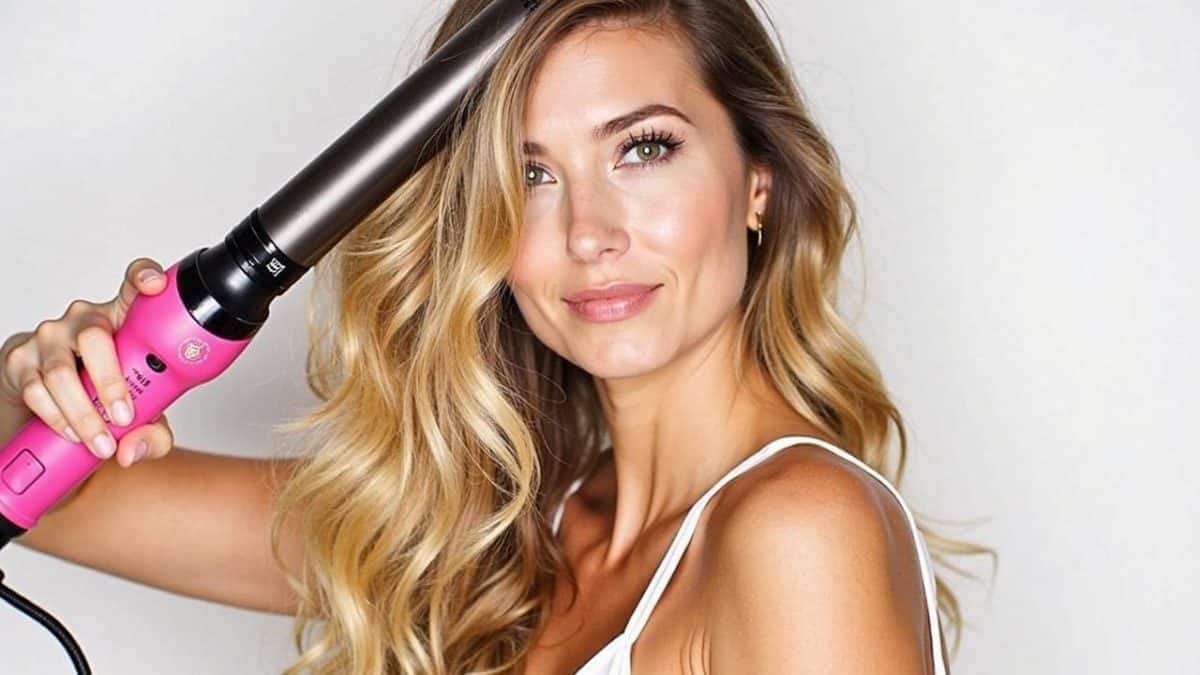
The woman in front of the café window had that hair. You know the kind: smooth, floaty, perfectly rounded at the ends, as if she’d just stepped out of a $200 blowout and into real life. Outside, the wind kept catching the strands and they fell back into place like they’d been trained for years. Inside, two friends at the next table stared, then quietly pulled out their phones and typed the same thing into Google: “thermal brush how to use.”
We’ve all been there, that moment when your own hair feels like a frizzy cloud and someone else’s looks like a shampoo commercial.
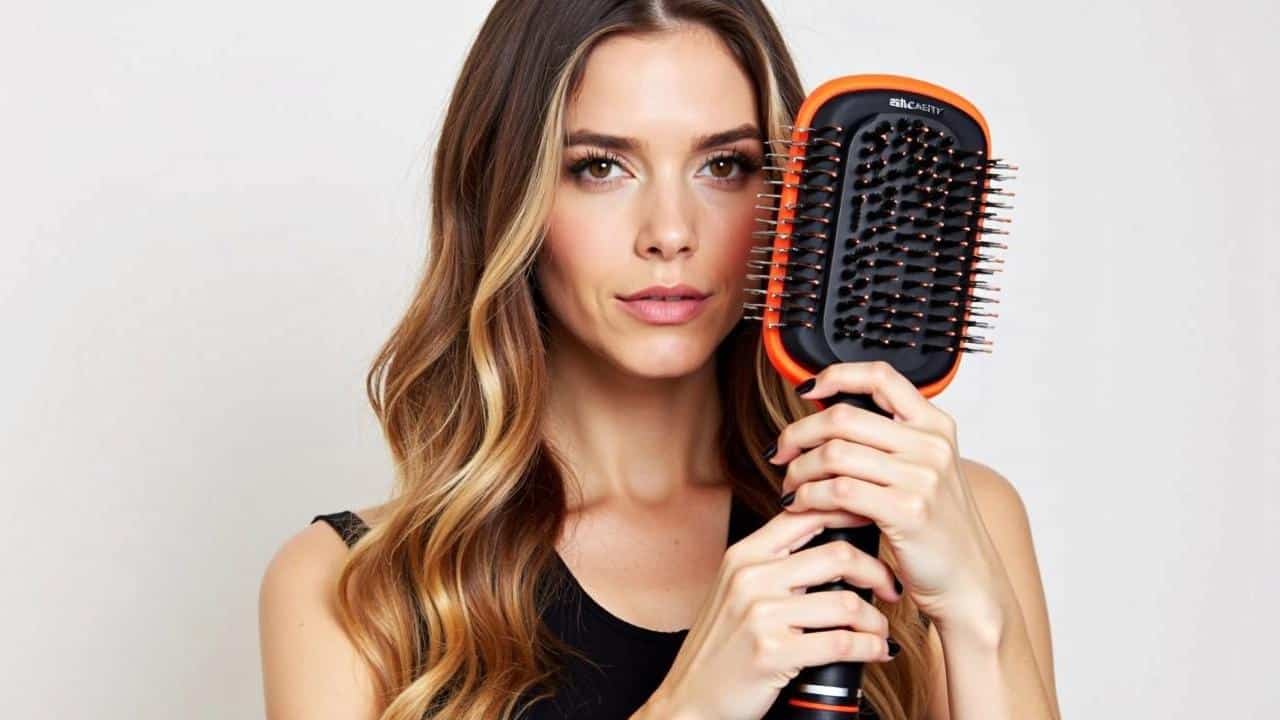
What changed the game for a lot of people isn’t a secret product. It’s a tool that looks almost boring. A round brush… that heats up.
Why thermal brushes suddenly feel like a salon at home
A few years ago, the idea of blow-drying your own hair into something glamorous felt like a fantasy reserved for influencers and seasoned stylists. At home, the reality was arms burning, awkward angles, and that clunky combination of hairdryer in one hand, brush in the other. The result? Frizz at the crown, weird bends at the ends, and the quiet decision to just wear a bun again.
Thermal brushes arrived like a cheat code: one tool, one hand, warm air or heated plates, bristles that grip and smooth at the same time.
Suddenly, a “salon blowout” stopped meaning three hours and a fortune.
On TikTok, search results for “thermal brush blowout” run into the hundreds of millions of views. One viral clip shows a woman with dense, 3-day-old hair, flattened at the roots and fluffy at the ends. She sections her hair, runs a thermal brush through just once, and those puffy strands turn into soft, glossy curves that frame her face.
Another creator, a busy nurse, films her 5 a.m. routine before a shift. Her caption: “7 minutes, no stylist, just this brush.” Her hair goes from bedhead chaos to rounded, bouncy layers while the kettle boils in the background.
What hooks viewers isn’t only the result, it’s the speed – and the feeling that this is actually doable before work.
There’s a simple reason this tool works so well on frizz. Frizz is just hair with raised cuticles: tiny shingles on a roof pointing in different directions. Classic blow-drying often roughs those cuticles up, especially when the air is too hot and too close.
A thermal brush combines tension, consistent heat and direction. The bristles pull the hair taut, the heat softens the strand, and the rolling movement teaches the hair to lie flat along its own length.
The result: smoother cuticles that reflect light instead of scattering it, which is why **even dull hair suddenly looks shinier**.
The right moves: how to use a thermal brush for smooth, not crispy, hair
Start before the brush even touches your head. Towel-dry your hair gently, then let it air-dry until it’s at that sweet spot: about 70–80% dry if your thermal brush blows hot air, or fully dry if it’s a heated styling brush. Spritz on a light heat protectant, comb through, and already you’ve done half the job.
➡️ Confidence from within: how self-perception alters beauty standards
➡️ Milky toner magic: hydrate and balance oily skin overnight
➡️ Boho bob haircut: wavy layers for casual chic vibes
➡️ High burst fade haircut: precision tips for sharp modern edges
➡️ Adaptive beauty perception: how culture shapes attractiveness ideals
➡️ Ethical beauty mindset: balancing enhancements with authenticity
➡️ 5 heatless curler hacks for perfect beach waves without damage
➡️ Beetlejuice lips: viral ombre tutorial for bold halloween vibes
Then, section. Top half clipped up, then divide the bottom into left and right. Each section should feel like an amount you can actually see and control, not a giant chunk you wrestle through the bristles.
From here, the secret is slow passes, not repeated ones.
The most common frustration? Roots that stay puffy and ends that flip in random directions. That usually comes from starting the brush too far down the strand. Instead, anchor the brush right at the root, wrap the section once, and hold for a couple of seconds before gliding down.
If your hair tends to frizz at the ends, avoid twisting the brush like a full roller coaster loop. Just add a gentle turn as you reach your shoulders, so the hair curves instead of kinks. *Think soft bend, not 90s barrel curl cosplay.*
Let’s be honest: nobody really does this every single day. That’s fine. Once or twice a week can already change how your hair behaves on the “lazy” days in between.
Some stylists call thermal brushes “training wheels for a good blowout.” One London hairdresser told me, “You’re not chasing a perfect salon finish. You’re chasing a version of your hair that feels aligned with you, that behaves.” That’s the real win: not frozen, Instagram hair, but hair that moves and still looks put-together by lunchtime.
- Start with the right temperature
Fine or damaged hair: low to medium heat. Thick or very curly hair: medium to high, but only as hot as you need for a single, smooth pass. - Work in small sections
If the brush feels stuck or you keep yanking, the section is too big. Smaller sections equal smoother cuticles and less breakage. - Always finish with a “cool” moment
Use the cool-shot button or let the hair sit on the brush for 3–5 seconds off the heat. This helps lock the new shape in place. - Keep the brush moving
Staying in one spot too long is how you end up with that dry, crispy patch that never lies right again. - Clean the bristles regularly
Dust, oil and product buildup on the tool will transfer straight to your hair and can dull the shine you’re working so hard for.
Beyond the blowout: what a smoother routine quietly changes
Something subtle happens when frizz stops being a daily battle. Mornings feel a little less like a negotiation in front of the mirror. The choice becomes less “bun or ponytail” and more “how do I want to show up today?” Hair will never be fully under control – weather, hormones, and random bad days will always exist – but the baseline improves.
For some, a thermal brush becomes a five-minute ritual before a big meeting. For others, it’s the tool that lets them wear their hair down for the first time without fearing the 3 p.m. halo of flyaways. **The tech is simple, the impact is quietly radical.**
If you’ve tried traditional blowouts and given up, this might feel like a second chance. The learning curve is real, but shorter than you think. One day you’re awkwardly twisting, the next your hand just… knows what to do.
What tends to surprise people is not the big “after” shot. It’s looking in a restroom mirror at work and noticing their hair still has shape, still swings, still feels like them. There’s a particular kind of ease that comes from not constantly adjusting, re-tucking, and re-tying your hair throughout the day.
That ease is underrated.
The question now isn’t only “Should I buy a thermal brush?” but “How do I want my hair routine to feel?” Fast and functional? Soft and ritualistic? Shared with a teenager who suddenly wants to learn, or a friend before a night out?
These tools sit at the intersection of practicality and small luxury. They don’t fix everything: humidity, bad cuts, and product overload can still sabotage the result. Yet they offer something rare in beauty: visible payoff in minutes, with skills you can build quietly in your own bathroom.
Maybe that’s why they keep popping up on Discover feeds: not as a miracle, but as a very human promise. A little heat, a little technique, and hair that finally cooperates – at least most days.
| Key point | Detail | Value for the reader |
|---|---|---|
| Prep changes everything | Right level of dryness, heat protectant, and clean sections set up a smoother blowout | Reduces frizz, protects hair health, and cuts styling time |
| Technique over temperature | Slow passes, root-to-tip tension, and cool-down beats cranking heat to the max | Prevents damage while still delivering a polished, salon-inspired finish |
| Consistency tames frizz long-term | Regular, gentle styling “trains” hair to lie flatter and behave better between washes | Makes everyday hair more manageable, even on low-effort days |
FAQ:
- Question 1Can I use a thermal brush on very curly or coily hair?
- Question 2Is a thermal brush less damaging than a flat iron?
- Question 3Should I use my thermal brush on wet or dry hair?
- Question 4Why does my hair still look frizzy after using the brush?
- Question 5How often can I use a thermal brush without ruining my hair?